Top MBA Colleges in Bangalore for Future Business Leaders

Top MBA Colleges in Bangalore for Future Business Leaders

However, searching for the Top MBA Colleges in Bangalore should involve more than looking at rankings or college names. Students should evaluate the quality of the curriculum, industry exposure, practical learning, specialization options, infrastructure, career development and opportunities to build leadership skills.
An MBA can open career pathways across marketing, finance, human resources, business analytics, operations, healthcare management, logistics and entrepreneurship. Yet, the value of the experience depends greatly on how effectively students can connect classroom knowledge with real business situations.
For future business leaders, an MBA should provide more than a postgraduate qualification. It should help students understand how organisations operate, analyse business problems, communicate ideas, work with teams and make informed decisions.
What Makes an MBA College Suitable for Future Business Leaders?
Future business leaders need a combination of academic knowledge, practical skills and professional exposure. Therefore, students should examine how an MBA program helps them develop capabilities that can be applied beyond the classroom.
A strong management education can help students develop:
Strategic thinking
Business communication
Leadership
Problem-solving
Analytical thinking
Decision-making
Team management
Financial awareness
Digital literacy
Entrepreneurial thinking
The right combination of these capabilities can help students approach business challenges with greater confidence and structure.
Strong Academic Foundation
Marketing Management
Financial Management
Human Resource Management
Operations Management
Business Strategy
Organisational Behaviour
Managerial Economics
Business Communication
These subjects help students understand how different functions within an organisation work together.
However, theoretical knowledge alone may not be enough. Future managers also need opportunities to understand how these concepts are applied in real organisations.
Practical Application of Management Concepts
Instead of only studying a marketing strategy from a textbook, students can analyse a real business case. Rather than simply learning financial concepts, they can examine how financial information influences an organisation's decisions.
This creates a progression:
Theory → Application → Analysis → Decision-Making
For students evaluating MBA Colleges in Bangalore, the availability of case studies, projects, presentations, internships and experiential learning can therefore be an important consideration.
Why Bengaluru Is an Important Destination for MBA Education
This makes the city an interesting environment for students who want to understand modern business practices.
The city's technology ecosystem is particularly relevant. Modern managers increasingly need to understand digital transformation, data-driven decision-making, artificial intelligence and changing customer expectations.
GMAC describes Bengaluru as India's technology capital and highlights its diverse business-school ecosystem and appeal to students interested in technology and business.
For students researching MBA Colleges in Bangalore City, the location can therefore provide an additional learning environment outside the classroom.
Exposure to a Diverse Business Ecosystem
| Industry | Possible Management Exposure |
|---|---|
|
Technology |
Digital transformation, product management, technology strategynn |
|
Startups |
Entrepreneurship, innovation, growth strategynn |
|
Financenn |
Banking, financial services, corporate financenn |
|
Healthcarenn |
Healthcare operations and administrationnn |
|
Retail |
Customer experience, sales and brand managementnn |
|
E-commercenn |
Digital marketing, analytics and operationsnn |
|
Logisticsnn |
Supply chain and operational managementnn |
|
Consulting |
Business strategy and problem-solvingnn |
Industry Exposure: A Key Factor When Choosing an MBA College
An industry-oriented MBA can connect classroom learning with professional situations through:
Internships
Live projects
Industry visits
Guest lectures
Corporate interactions
Workshops
Case-study competitions
Professional mentoring
Business simulations
These experiences can help students understand how management concepts are applied in actual organisations.
Internships and Workplace Experience
During an internship, students may observe how teams communicate, how projects are managed and how business decisions are made.
They can also develop practical skills such as:
Professional communication
Report preparation
Data analysis
Presentation
Team collaboration
Time management
Problem-solving
For students comparing Good MBA Colleges in Bangalore, internship opportunities should therefore be considered as part of the overall learning experience.
Live Projects and Real Business Problems
nInstead of answering only theoretical questions, students may work on business-related problems such as:
Customer research
Competitor analysis
Marketing campaigns
Financial analysis
Employee engagement
Business process improvement
Supply chain analysis
Data interpretation
The process can involve:
Identify the problem → Gather information → Analyse → Develop solutions → Present recommendations
This type of structured problem-solving can help students understand how management decisions are made in professional environments.
Case-Based Learning for Future Managers
Case-based learning can help students practise this type of thinking.
A business case may present an organisation facing a specific challenge. Students then analyse the available information and determine what the company could do.
For example, imagine a company experiencing declining market share.
Students might need to determine whether the issue is related to:
Pricing
Competition
Customer expectations
Product positioning
Distribution
Marketing
Customer experience
This requires students to move beyond memorising definitions and instead examine the relationship between different business factors.
Developing Strategic Thinking
nStudents can learn to consider:
Market conditions
Competitors
Customer requirements
Financial resources
Organisational capabilities
Technology
Business risks
Long-term objectives
Silicon City College describes its MBA as using a case-study-driven approach alongside real-time business exposure and hands-on learning. Its program also highlights internships, industry visits and interaction with industry experts.
Leadership Development Should Be Part of the MBA Experience
Students need opportunities to take responsibility, work with others, communicate decisions and solve problems.
Therefore, students researching an MBA Institute in Bangalore should consider what opportunities exist beyond regular classroom lectures.
Team Projects
Students may learn to:
Divide responsibilities
Manage deadlines
Resolve disagreements
Present ideas
Take responsibility
Give and receive feedback
These experiences can become useful when students enter professional environments where projects involve multiple people and departments.
Student Clubs and Activities
Organising an event, leading a team or coordinating an activity can require planning, communication and problem-solving.
Silicon City College highlights student clubs and activities that support leadership, teamwork, communication and organisational skills as part of its student experience.
Preparing MBA Students for Future Business Requirements
Artificial intelligence, automation, analytics, digital platforms and changing customer behaviour are influencing how organisations operate.
Therefore, students comparing Best MBA Colleges in Bangalore should consider whether their chosen program prepares them for both traditional management responsibilities and emerging business requirements.
Business Analytics
It can be applied to:
Customer analysis
Sales forecasting
Marketing performance
Financial analysis
Operations
Business intelligence
For an MBA student, analytics can provide another way of approaching business problems.
Artificial Intelligence in Business
Customer service
Marketing
Forecasting
Automation
Data analysis
Operational efficiency
Business intelligence
Future managers do not necessarily need to become AI developers. However, understanding how AI can create business value can become an increasingly useful management skill.
Silicon City College lists Data Science & Artificial Intelligence in Business and Business Analytics among its MBA specialization options.
How Students Should Evaluate Top MBA Colleges in Bangalore
One student may prioritise affordability.
Another may focus on industry exposure. Someone else may be interested in analytics, entrepreneurship, international exposure or a specific specialization.
Therefore, students should compare institutions using multiple factors.
- Curriculum
- Faculty
- Specialization options
- Learning methodology
- Infrastructure
- Academic support
- Internships
- Live projects
- Industry visits
- Expert sessions
- Workshops
- Corporate interaction
- Career guidance
- Skill development
- Interview preparation
- Placement support
- Professional communication
- Networking opportunities
- Business Analytics
- Artificial Intelligence
- Digital transformation
- Data-driven decision-making
- Entrepreneurship
- Global business
The Right MBA Is About More Than a College Name
However, the right MBA college depends on the student's career goals, learning preferences, financial considerations and desired specialization.
Instead of asking only:
“Which college is the best?”
students should also ask:
“Which college provides the learning environment I need?”
The answer should consider the complete MBA experience.
A future business leader should ideally graduate with more than a degree. They should have developed the ability to understand business problems, analyse information, communicate ideas, work with teams and make informed decisions.
The Future Business Leader Mindset
Academic Knowledge
↓
Practical Application
↓
Industry Exposure
↓
Professional Skills
↓
Strategic Thinking
↓
Career Readiness
This is the kind of development students should look for when comparing MBA Clg in Bangalore options.
MBA Specializations That Can Shape Future Business Leaders
Students researching Top MBA Colleges in Bangalore should therefore look beyond the availability of an MBA degree and examine the breadth and relevance of specialization options. A modern management program should help students understand established business functions while also introducing them to emerging areas shaped by technology, data and changing consumer expectations.
Silicon City College's MBA program offers dual specialization, with options including Data Science & Artificial Intelligence in Business, Business Analytics, Marketing, Finance, Human Resource Management, Logistics & Supply Chain Management and Healthcare Management. Students can choose two specializations, giving them an opportunity to build knowledge across complementary business areas.
Marketing and Consumer-Centric Business Thinking
An MBA student interested in marketing can develop skills in areas such as:
Consumer behaviour
Brand management
Digital marketing
Market research
Sales management
Customer relationship management
Marketing analytics
This knowledge can be valuable for students who want to explore careers involving brand strategy, sales, business development, digital marketing and customer experience.
Finance and Strategic Decision-Making
An MBA specialization in Finance can help students develop an understanding of:
Corporate finance
Financial planning
Investment decisions
Risk management
Financial analysis
Business valuation
Strategic financial decision-making
For future business leaders, financial knowledge is useful even when their eventual career is outside the finance department. Understanding how decisions affect business performance can make managers more effective across functions.
Human Resource Management and People Leadership
MBA students exploring HR can develop knowledge of:
Talent acquisition
Employee development
Performance management
Organizational behaviour
Compensation
Employee engagement
Workplace culture
This specialization can be particularly relevant for students who see themselves in people-management, organizational development or leadership-oriented roles.
Emerging Specializations for a Technology-Driven Business Environment
Students comparing MBA Colleges Bangalore options should consider whether their chosen program provides exposure to these emerging areas rather than focusing exclusively on traditional management subjects.
Business Analytics for Data-Driven Decisions
Students can develop an understanding of:
Data interpretation
Business intelligence
Performance measurement
Predictive thinking
Data visualization
Analytical problem-solving
For example, a business analyst may examine customer behaviour to understand why sales changed in a particular market. A marketing manager could use campaign data to determine which channels generate better results.
This combination of management and analytical thinking is increasingly valuable in technology-driven organizations.
Artificial Intelligence in Business
An MBA student does not necessarily need to become a software engineer. Instead, future managers need to understand how AI can support business processes, improve efficiency and influence strategic decisions.
AI-focused business education can introduce students to concepts such as:
AI-driven decision-making
Automation
Predictive analytics
Intelligent customer service
Data-driven strategy
Digital transformation
Silicon City College lists Data Science & Artificial Intelligence in Business among the specialization options in its MBA program.
MBA Specializations and Their Business Relevance
| Industry | Possible Management Exposure | Potential Business Direction |
|---|---|---|
|
Marketing |
Customers, brands, sales and market strategy
|
Marketing, sales, business development
|
|
Finance |
Financial analysis, investment and risk
|
Finance, consulting, strategic management
|
|
Human Resource Management |
Talent, performance and organizational behaviour |
HR, people management, organizational development |
|
Business Analytics |
Data interpretation and business intelligence |
Business analysis, analytics, strategy |
|
Data Science & AI in Business |
AI, data and technology-enabled decisions |
Digital business, analytics, transformation |
|
Logistics & Supply Chain Management |
Procurement, operations and distribution
|
Supply chain, operations, logistics |
|
Healthcare Management |
Healthcare operations and management |
Healthcare administration and management |
The Value of Dual Specialization in an MBA
That is why dual specialization can provide a broader perspective.
Silicon City College's MBA program specifically offers dual specialization, allowing students to choose two areas from its listed specialization options. The college positions this approach as a way to broaden career opportunities.
Combining Complementary Business Functions
For example:
This combination can help students understand both customer-focused strategy and the data used to evaluate marketing performance.
This can create a strong foundation for students interested in financial analysis and data-supported decision-making.
This combination can connect people management with workforce data, performance analysis and organizational decision-making.
Choosing Specializations Based on Career Goals
1. Which business functions interest me most?
2. Do I prefer working with people, numbers, technology or customers?
3. Which industries interest me?
4. What skills do I already have?
5. Which skills do I need to develop?
6. Does the specialization support my intended career direction?
This approach makes specialization selection more strategic rather than simply following trends.
Internships and Live Projects Turn Management Theory into Experience
Internships and live projects can bridge the gap between academic concepts and workplace situations.
Students researching MBA Colleges in Bangalore City should therefore examine how an institution approaches practical exposure instead of evaluating programs only by their syllabus.
Silicon City College highlights internships and industry visits as part of its MBA learning experience and describes its approach as case-study-driven, with real-time business exposure and hands-on learning.
Understanding Workplace Experience
Students may experience:
Workplace communication
Team coordination
Project deadlines
Reporting structures
Client requirements
Business documentation
Professional presentations
Problem-solving under constraints
These experiences can help students understand how management principles work in real organizations.
Solving Real Business Problems
A project might involve questions such as:
Why are customers leaving a particular product?
How can a company improve its digital marketing performance?
Which market segment offers better growth potential?
How can operational costs be reduced? What factors are affecting employee retention?
Students then have to gather information, analyse the situation, evaluate alternatives and present recommendations.
That process develops the habit of thinking like a manager rather than simply memorizing concepts for examinations.
Industry Interaction Helps Students Understand the Business World
Industry interactions can introduce students to different organizational structures, business models, professional expectations and emerging market trends.
Silicon City College describes industry interactions, practical learning, projects and workshops as components of its broader academic approach. Its institutional information also highlights industry connections supporting practical learning, specialized training and internships.
Industry Visits and Business Exposure
Depending on the organization and activity, students may gain exposure to:
Operations
Supply chains
Customer service
Technology systems
Human resource practices
Production processes
Business administration
Such experiences can help students connect theoretical concepts with observable business processes.
Guest Lectures and Industry Experts
Professionals working in different industries can discuss:
Current industry expectations
Career opportunities
Professional skills
Business challenges
Emerging technologies
Leadership experiences
Silicon City College highlights guest lectures, expert sessions, workshops and industry interactions as part of its student development activities.
For students, the value lies not only in listening to professionals but also in asking questions and understanding how classroom concepts translate into workplace decisions.
Workshops Build Professional Skills Beyond the MBA Curriculum
Business professionals also need to communicate ideas, work with teams, solve problems and make decisions under pressure. Workshops can provide focused opportunities to develop these capabilities.
Communication and Presentation Skills
MBA students can strengthen communication through:
Presentations
Group discussions
Business pitches
Case-study presentations
Debates
Team assignments
These activities can improve clarity, confidence and the ability to structure business arguments.
Analytical and Problem-Solving Skills
Case studies, simulations, projects and analytical exercises can encourage students to:
Identify the business problem.
Gather relevant information.
Analyse possible causes.
Develop alternative solutions.
Compare the options.
Recommend an action.
Explain the reasoning behind the decision.
This process encourages structured thinking and prepares students for complex business situations.
Leadership and Teamwork Skills
Student activities, clubs, group projects, workshops and leadership programs can provide opportunities to practise these skills. Silicon City College's student-life information highlights activities designed to build confidence, creativity, teamwork and leadership capabilities.
How Practical Learning Supports MBA Employability
Students evaluating Good MBA Colleges in Bangalore should therefore consider whether the learning environment helps them build a combination of knowledge, practical ability and professional behaviour.
Leadership skills help professionals take ownership, coordinate teams and make responsible decisions.
Strong communication helps professionals explain ideas, present recommendations and collaborate with different stakeholders.
Employers value professionals who can understand problems, evaluate information and develop practical solutions.
The business environment changes continuously. Managers may need to learn new technologies, understand new customer expectations or respond to changing market conditions.
Business projects rarely involve one person working independently. Managers must coordinate with colleagues across departments and sometimes across different locations.
Practical MBA Experiences and Skills Developed
| Learning Experience | Skills Students Can Develop |
|---|---|
|
Case studies
|
Analysis, decision-making, strategic thinking
|
|
Internships
|
Professional communication, workplace understanding
|
|
Live projects
|
Problem-solving, research, teamwork
|
|
Industry visits |
Business awareness, operational understanding
|
|
Guest lectures
|
Industry awareness, career insights
|
|
Workshops
|
Communication, technical and professional skills
|
|
Student clubs
|
Leadership, collaboration, organization
|
|
Presentations
|
Confidence, communication, structured thinking
|
What Future Business Leaders Should Look for in an MBA Program
A better approach is to examine the complete learning ecosystem.
Examine opportunities for teamwork, presentations, student activities, workshops and leadership development.
Look at the curriculum, core management subjects and available specializations.
Consider the availability of career guidance, professional development activities and industry interaction.
Check whether students receive opportunities for projects, internships, case studies, industry visits and experiential learning.
Consider whether the program addresses areas such as analytics, artificial intelligence, digital transformation and data-driven decision-making.
Career Preparation Should Begin During the MBA
Career preparation can include mentoring, skill-development activities, industry interaction, internships, presentations, workshops and opportunities to understand workplace expectations.
The objective is not simply to prepare students for their first job. Instead, an effective MBA experience should help students develop transferable capabilities that can remain valuable as they progress into more responsible roles.
Silicon City College highlights career guidance, skill development, placement assistance, industry exposure and practical learning as components of its student-support and academic ecosystem.
Building a Professional Mindset
Students should gradually learn how to:
Meet deadlines
Communicate professionally
Accept feedback
Work with different personalities
Take ownership of responsibilities
Present ideas clearly
Adapt to changing requirements
Approach problems logically
These habits can make the transition from classroom learning to professional life smoother.
Developing a Career Plan
1. What type of work interests me?
2. Which skills are required for that career?
3. What experiences can I gain during my MBA to demonstrate those skills?
This approach allows students to choose electives, projects, internships and extracurricular activities more strategically.
Placement Readiness Is More Than a Placement Drive
When comparing MBA Colleges Bangalore, students should therefore distinguish between a placement event and broader career preparation.
Placement readiness can involve:
Resume development
Interview preparation
Group discussions
Presentation skills
Communication training
Professional etiquette
Industry awareness
Career counselling
Skill development
Silicon City College states that it provides career guidance, placement assistance and skill-development initiatives, while its MBA program highlights placement-focused training from the beginning of the program.
Resume and Profile Development
It can demonstrate:
Internships
Live projects
Certifications
Leadership responsibilities
Student activities
Business competitions
Technical or analytical skills
Relevant extracurricular experiences
A well-structured profile makes it easier for employers to understand what a candidate can contribute.
Interview and Group Discussion Skills
Group discussions can develop:
Listening
Logical reasoning
Confidence
Concise communication
Collaboration
Respectful disagreement
Interview preparation can similarly help students explain their experiences, strengths, career goals and problem-solving approach.
Entrepreneurship Can Be an Important Part of Future Leadership
For such students, an MBA can provide exposure to areas such as:
Business planning
Market research
Financial management
Marketing
Operations
Human resources
Strategy
Customer analysis
From Business Idea to Business Model
Students can learn to examine:
Problem → Customer → Solution → Business Model → Market → Revenue → Growth
This framework encourages students to think beyond simply having an idea.
A strong business concept must also answer practical questions:
Who is the customer?
What problem is being solved?
Why would customers pay for the solution?
Who are the competitors?
What makes the offering different?
What resources are required?
How can the business grow?
Learning Through Business Cases
Silicon City College describes its MBA as case-study-driven and focused on real-time business exposure and hands-on learning.
This type of learning can encourage students to consider multiple solutions instead of assuming that every business problem has a single correct answer.
Networking Can Expand the MBA Experience
Networking can happen through:
Industry sessions
Guest lectures
Workshops
Internships
Student clubs
Competitions
Alumni interactions
Conferences
Exchange programs
The value of networking is not simply the number of contacts a student collects. Meaningful professional relationships develop when students share ideas, learn from one another and maintain connections over time.
Learning From Peers
A student with a finance background may approach a business problem differently from someone interested in marketing or technology.
Working together can expose students to alternative ways of thinking.
Connecting With Industry Professionals
Questions about:
Industry expectations
Emerging roles
Professional skills
Career pathways
Technology trends
Workplace challenges
can help students develop a more realistic understanding of management careers.
Global Exposure Can Broaden a Future Manager's Perspective
Therefore, exposure to international perspectives can be valuable for students preparing for management careers.
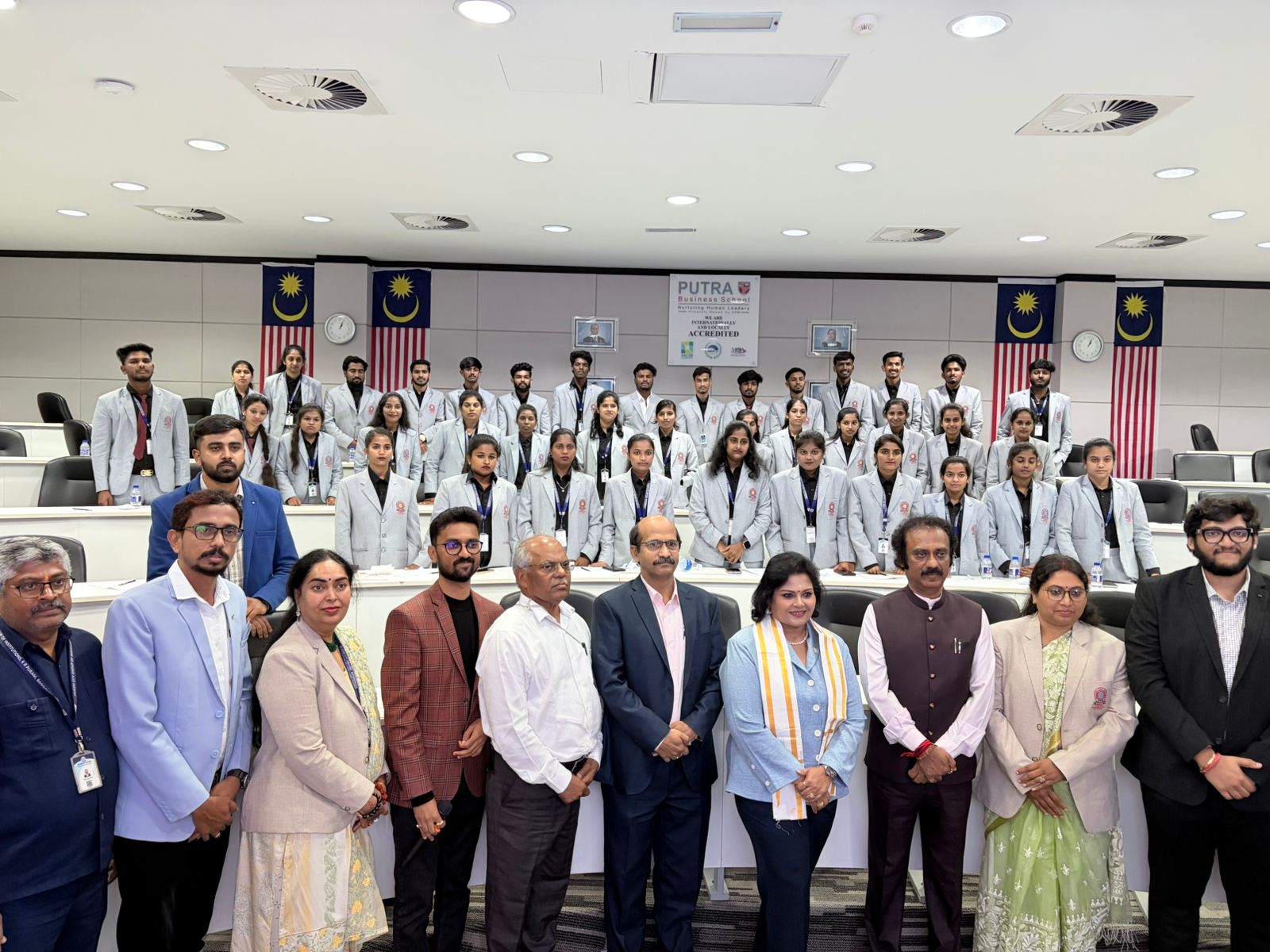
Silicon City College's MBA program highlights a global exposure trip and an Inter University Student Exchange Program with Universiti Putra, Malaysia.
Understanding Different Business Environments
For example:
Customer preferences can vary.
Communication styles can differ.
Regulations can change between countries.
Business cultures may influence negotiations.
Market-entry strategies can depend on local conditions.
Understanding these differences can help future managers develop a broader business perspective.
Developing Cross-Cultural Communication
Students can develop this ability by participating in international academic activities, exchange opportunities and diverse campus experiences.
Campus Life Can Contribute to Leadership Development
Student organizations, events, competitions, cultural activities and community initiatives can create additional opportunities to develop interpersonal and leadership skills.
Silicon City College highlights student organizations, leadership development, teamwork, communication and organizational skills as part of campus life.
Student Clubs and Organizations
Event planning
Team coordination
Communication
Promotion
Budgeting
Scheduling
Execution
These responsibilities can simulate some of the coordination challenges professionals face in organizations.
Events and Competitions
Business-related activities can involve:
Case competitions
Business quizzes
Presentations
Debates
Entrepreneurship activities
Marketing challenges
Such experiences can encourage quick thinking, teamwork and communication.
Community Engagement
Community initiatives can encourage students to understand issues beyond commercial objectives and develop empathy, collaboration and responsibility.
Silicon City College's student-life information includes community service and outreach activities as part of campus engagement.
Technology Should Be Part of Modern Management Education
Therefore, students comparing MBA Colleges in Bangalore should consider how the program addresses technology-enabled business environments.
Data-Driven Management
Students should understand how to:
Interpret business data
Identify meaningful trends
Ask better analytical questions
Evaluate evidence
Support recommendations with data
The goal is not necessarily to turn every MBA student into a data scientist. Instead, managers should become comfortable using information to support decisions.
Artificial Intelligence and Digital Transformation
Future managers therefore need to understand both the opportunities and limitations of AI.
Important questions include:
Where can AI improve efficiency?
What information is required?
How should organizations evaluate AI-generated insights?
What risks can arise from poor data?
How can employees adapt to automation?
Silicon City College's MBA specialization options include Data Science & Artificial Intelligence in Business and Business Analytics, reflecting the growing connection between technology and management education.
How to Compare MBA Colleges in Bangalore Before Applying
Instead, students should create a comparison framework.
- Core management subjects
- Electives
- Specializations
- Emerging business areas
- Practical components
- Project requirements
- Internships
- Live projects
- Case studies
- Industry visits
- Workshops
- Guest lectures
- Industry interactions
- Clubs
- Leadership activities
- Communication development
- Career guidance
- Mentoring
- Skill-development programs
- Student exchange opportunities
- International collaborations
- Global certifications
- Overseas academic activities
- Career planning
- Resume preparation
- Interview preparation
- Placement activities
- Professional skills
- Industry interaction
MBA College Evaluation Checklist
| Factor | Questions Students Should Ask |
|---|---|
|
Curriculum |
Does it cover current management and business requirements?
|
|
Specializations |
Are the areas relevant to my career interests?
|
|
Practical Learning
|
Are internships, projects and case studies included?
|
|
Industry Exposure
|
Are there industry visits and professional interactions?
|
|
Technology
|
Does the program address analytics and emerging technologies?
|
|
Leadership
|
Are there opportunities for teamwork and leadership?
|
|
Career Support
|
Is career guidance and placement assistance available?
|
|
Global Exposure
|
Are international learning opportunities available?
|
|
Campus Life
|
Are clubs, events and student activities encouraged?
|
|
Mentoring |
Can students receive academic and career guidance?
|
A Future Business Leader Needs More Than an MBA Degree
However, the long-term value of the experience also depends on how students use the opportunities available to them.
A future business leader should gradually develop four dimensions:
Knowledge + Skills + Experience + Mindset
Knowledge provides the conceptual foundation.
Skills allow students to apply that knowledge.
Experience teaches them how business situations work in practice.
Mindset influences how they approach responsibility, uncertainty, teamwork and continuous learning.
Silicon City College describes its educational approach around academic excellence, industry relevance, practical learning, leadership development and global exposure, with the broader objective of preparing students for evolving professional environments.
Continuous Learning
Technologies change. Consumer expectations change. Industries evolve. New business models emerge.
Therefore, future managers need to remain curious and continue learning even after completing their MBA.
Ethical and Responsible Leadership
Managers make decisions that can affect employees, customers, organizations and communities.
A strong management education should therefore encourage students to consider not only:
“Can this decision improve business performance?”
but also:
“Is this decision responsible and sustainable?”
This broader perspective can help students develop into professionals who combine commercial awareness with ethical judgment.
What Students Should Verify Before Choosing an MBA College
Students searching for Top MBA Colleges in Bangalore should compare institutions using information that directly affects their learning experience.
Before applying, students should review the curriculum, specialization options, practical learning opportunities, industry exposure, career support, infrastructure and admission requirements.
The University Grants Commission also advises students and parents to verify the authenticity of higher educational institutions before taking admission.
Verify Recognition and Institutional Information
Important details can include:
Institutional recognition
Affiliation
Approval requirements applicable to the program
Autonomous status, where applicable Program duration
Admission eligibility
Fee structure
Academic calendar
For example, Silicon City College states that its MBA is a two-year, AICTE-approved program affiliated with Bengaluru North University.
Students should independently verify current admission information before enrolling because program details and regulatory requirements can change.
Examine the Actual MBA Curriculum
Review:
Core management subjects
Elective subjects
Specializations
Projects
Internships
Practical components
Emerging business areas
Assessment methods
A curriculum that balances management fundamentals with current business requirements can provide a stronger foundation for students entering a changing professional environment.
Understand the Specialization Structure
Silicon City College's current MBA program lists seven specialization areas and allows students to choose any two:
Data Science & Artificial Intelligence in Business
Business Analytics
Marketing
Finance
Human Resource Management
Logistics & Supply Chain Management
Healthcare Management
Understanding this structure before admission can help students determine whether the program aligns with their interests and career plans.
Location Can Add Value to the MBA Experience
However, location alone should not determine which MBA Institute in Bangalore a student chooses.
The more important question is how students can use the opportunities available around them.
Exposure to a Diverse Business Ecosystem
Bengaluru's ecosystem includes sectors such as:
Information technology
Startups
E-commerce
Financial services
Healthcare
Consulting
Manufacturing
Logistics
Digital businesses
This diversity can help MBA students understand how management principles differ between industries.
Learning Beyond the Classroom
Industry events
Professional networking
Business conferences
Workshops
Corporate interactions
Entrepreneurship communities
Internships
The value of these opportunities depends on how actively students participate in them.
A Practical Decision-Making Framework for MBA Aspirants
However, instead of immediately deciding which college is "best", students can first define what "best" means for their own goals.
Step 1 — Define Your Career Direction
For example:
Marketing
Finance
Human resources
Analytics
Artificial intelligence
Supply chain
Healthcare
Entrepreneurship
General management
You do not need to have your entire career planned before joining an MBA. However, having a broad direction can make your specialization and project choices more meaningful.
Step 2 — Compare Specializations
Ask:
Does the program offer the subjects I want to study?
If the answer is no, a college may not be the right fit regardless of its popularity.
Step 3 — Examine Practical Learning
Case studies
Internships
Live projects
Industry visits
Workshops
Guest lectures
Industry interaction
These opportunities can help students connect management theory with real-world situations.
Step 4 — Evaluate Career Support
Career guidance
Skill development
Resume preparation
Interview training
Placement assistance
Industry interaction
Avoid judging an institution only by isolated placement claims. Instead, examine the broader career-development ecosystem.
Step 5 — Compare the Overall Student Experience
Campus facilities
Student activities
Clubs
Mentoring
Leadership opportunities
Global exposure
Academic support
The right MBA experience should support both professional and personal development.
A Simple MBA College Comparison Scorecard
| Evaluation Area | Suggested Weight | What to Evaluate |
|---|---|---|
|
Curriculum |
20%
|
Core subjects, electives and relevance
|
|
Specializations |
15%
|
Alignment with career interests
|
|
Practical Learning
|
15%
|
Projects, internships and case studies
|
|
Industry Exposure
|
10%
|
Industry visits, experts and interactions
|
|
Career Support |
15%
|
Guidance, training and placement assistance
|
|
Faculty & Mentoring
|
10%
|
Academic support and mentorship
|
|
Global Exposure
|
5%
|
Exchange and international opportunities
|
|
Campus & Student Life
|
5%
|
Clubs, activities and leadership
|
|
Infrastructure
|
5%
|
Classrooms, labs, library and facilities
|
Students can adjust the weighting according to their priorities.
Why the "Best" MBA College Can Be Different for Every Student
In reality, students have different objectives. One student may prioritize Finance.
Another may want Business Analytics.
Someone else may be interested in entrepreneurship.
A fourth student may value international exposure.
Therefore, the right question is not simply:
"Which is the best MBA college?"
A better question is:
"Which MBA program gives me the learning environment, specialization and opportunities that match my career goals?"
Career Goals Should Influence the Choice
Someone interested in technology-driven management may prefer Business Analytics or AI-focused business education.
A student interested in people management may prioritize Human Resource Management.
The decision should begin with the student's career direction rather than the college name alone.
Learning Style Also Matters
Some students benefit from:
Case studies
Discussions
Projects
Presentations
Group activities
Practical assignments
Others may prefer a more traditional academic approach.
Understanding your own learning style can help you identify an MBA environment where you are likely to participate actively.
Silicon City College's MBA Approach for Aspiring Business Leaders
Silicon City College describes its MBA as an industry-aligned, two-year program with case-study-driven learning, real-time business exposure and hands-on learning. The program also includes dual specialization, internships and industry visits, along with exposure to emerging areas such as Business Analytics and Artificial Intelligence in Business.
The college's broader academic approach emphasizes academic rigor, industry relevance, practical learning, leadership development and global learning opportunities.
For students evaluating Best Management Colleges in Bangalore, these factors can be considered alongside their own academic goals, specialization preferences and career plans.
The college states that its academic ecosystem combines academic learning with industry relevance, projects, workshops, industry interactions and experiential learning.
This approach can help students connect classroom concepts with business situations.
The MBA program allows students to choose two specializations from its available options, creating an opportunity to develop knowledge across complementary management areas.
Silicon City College also highlights a global exposure trip and an Inter University Student Exchange Program with Universiti Putra, Malaysia as part of its MBA offering.
Frequently Asked Questions About MBA Colleges in Bangalore
Which factors should I consider when choosing an MBA college in Bangalore?
Why is Bangalore considered a popular destination for MBA education?
Is specialization important when selecting an MBA program?
What is dual specialization in an MBA?
How important are internships during an MBA?
Does an MBA prepare students for entrepreneurship?
Should students choose an MBA college only based on rankings?
How can I verify an institution before admission?
What is industry-oriented learning in an MBA?
Why should I consider MBA Colleges Bangalore with industry exposure?
Do industry-oriented MBA programs include internships?
Silicon City College states that its MBA includes real-world exposure through internships and industry visits.
Is Business Analytics useful for MBA students?
Silicon City College offers Business Analytics as one of its MBA specialization options.
Can an MBA include Artificial Intelligence?
Silicon City College lists Data Science & Artificial Intelligence in Business as one of its MBA specialization choices.
What should I look for in an MBA Institute in Bangalore?
Final Checklist Before Applying to an MBA College
☐ Review the MBA curriculum
☐ Check eligibility requirements
☐ Compare specialization options
☐ Understand the duration of the program
☐ Review the academic structure
☐ Check internship opportunities
☐ Look for live projects
☐ Review case-study learning
☐ Check industry visits
☐ Explore workshops and industry interactions
☐ Review career guidance
☐ Understand placement assistance
☐ Check skill-development activities
☐ Prepare a career direction
☐ Identify relevant certifications or additional skills
☐ Verify recognition and affiliation
☐ Review official admission information
☐ Check infrastructure
☐ Explore student activities
☐ Review global learning opportunities
☐ Compare the overall cost of education
Conclusion — Choosing an MBA That Prepares You for the Future
The right program should give you a strong foundation in business concepts while also helping you develop practical skills, analytical thinking, communication, teamwork and leadership capabilities.
Specialization matters because it allows you to explore areas aligned with your career interests. Practical learning matters because management concepts become more meaningful when students can apply them to real or realistic business situations. Industry interaction matters because it helps students understand professional expectations. Global exposure and diverse campus experiences can broaden perspectives.
For students exploring Best MBA Colleges in Bangalore, Silicon City College offers an MBA with dual specialization, case-study-driven learning, internships, industry visits and exposure to areas such as Business Analytics and Data Science & Artificial Intelligence in Business. Its broader academic approach also emphasizes industry relevance, practical learning, leadership development and global opportunities.
Ultimately, the goal of an MBA should extend beyond earning a postgraduate qualification. It should help students become more capable of analysing problems, making decisions, working with people, adapting to change and taking responsible leadership.
If you are exploring MBA options in Bengaluru, start by comparing programs against your own career goals, learning preferences and professional ambitions. Explore the MBA program at Silicon City College, review the curriculum and admission information, and take the next step toward building your future in business and management.
Categories
Subscribe Newsletter
Join with 10.000+ Subscribers and get a new promo coupon every friday.
Related Insights & Perspectives
- September 22, 2026
- Silicon City College
BBA Full Form, Course Subjects, Eligibility & Career Scope (2026)
- August 14, 2026
- Silicon City College
MBA Colleges Bangalore Offering Industry-Oriented Learning
- July 13, 2026
- Silicon City College
2 Responses