

Top MBA Colleges in Bangalore with Fee Structure: Maximizing Academic Value and ROI (2026 Guide)
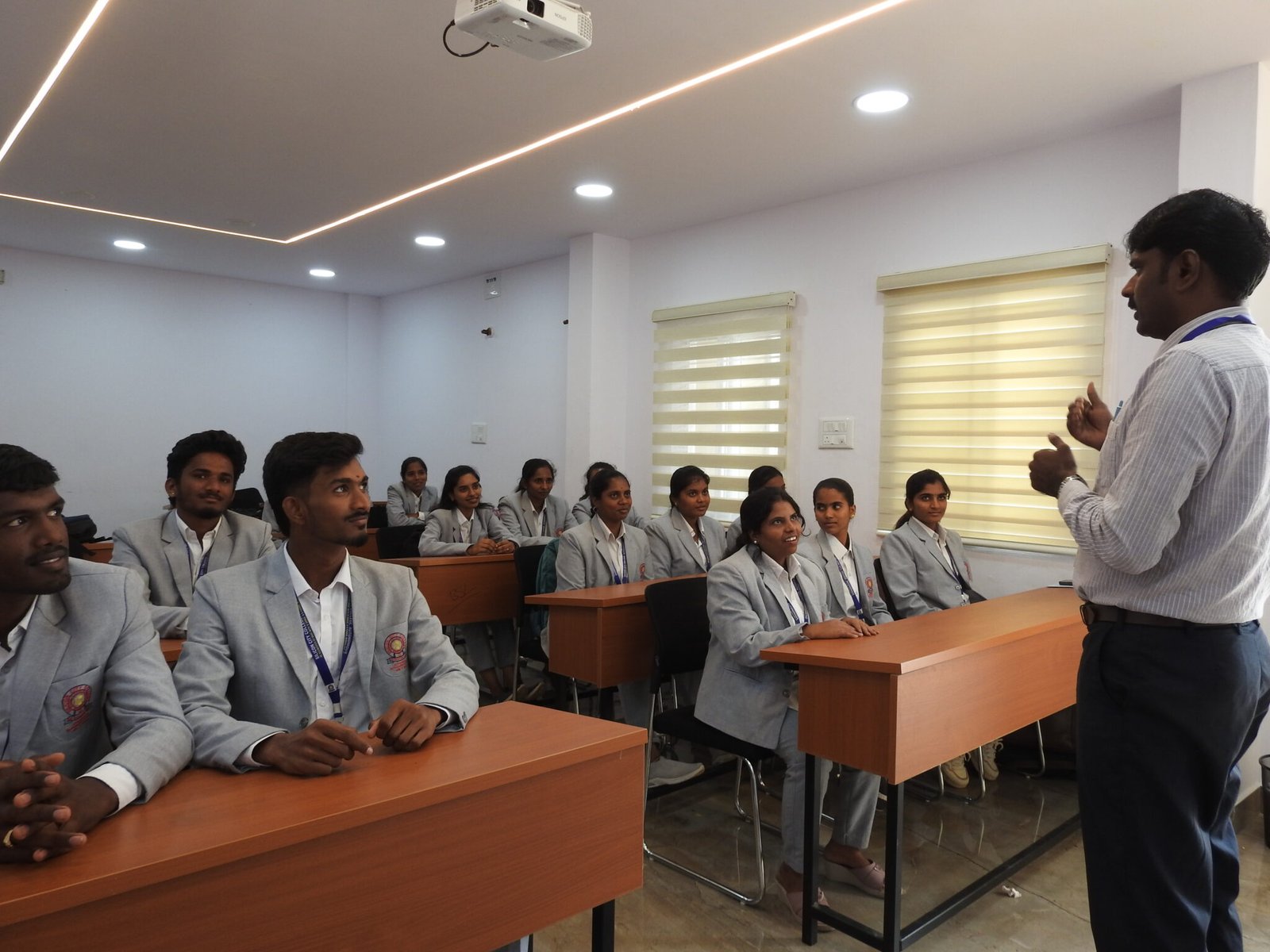
Pursuing a Master of Business Administration (MBA) in Bangalore is widely considered one of the most strategic career investments a young professional can make. As India’s undisputed technology and corporate capital, Bangalore offers an incredibly aggressive business environment. From massive Fortune 500 campuses in Whitefield to the thriving startup incubators dotting the K R Puram and Indiranagar corridors, the city provides an unparalleled ecosystem for aspiring business leaders, marketing strategists, and financial executives.
However, this immense opportunity is often accompanied by significant financial anxiety. For thousands of prospective students and their families, the primary barrier to entry is not the academic rigor of the entrance exams, but the sheer cost of the degree. When researching the top MBA colleges in Bangalore with fee structure, students frequently encounter wildly varying numbers. Some elite standalone institutions charge upwards of ₹20 Lakhs, while other university-affiliated colleges offer programs for a fraction of that cost.
How do you navigate this massive financial spectrum? What exactly are you paying for when you write that tuition check? Is it possible to find mba colleges in Bangalore with low fees that still deliver exceptional corporate placements and academic rigor?
This comprehensive 2,000+ word guide will meticulously deconstruct the reality of mba fees in Bangalore. We will explore the hidden costs, the difference in semester structures, the value of campus infrastructure, and most importantly, how to calculate the true Academic Return on Investment (ROI) before you commit to a program.
The Broad Spectrum: Understanding MBA Fees in Bangalore
Before diving into the granular details, it is crucial to understand why MBA fee structures in Bangalore vary so drastically. The cost of your degree is entirely dependent on the type of institution you choose to attend.
1. Premium Standalone Business Schools (Tier 1)
These are the most famous, highly-ranked institutions (such as IIM Bangalore). Their fees generally range from ₹15 Lakhs to ₹25 Lakhs for the two-year program.
Why so expensive? These institutions charge a premium for their historic brand value, elite global alumni networks, massive residential campuses, and direct pipelines to international executive placements.
2. Premium Private Universities and Autonomous Colleges (Tier 2)
These institutions, such as Silicon City College, represent the “sweet spot” for the vast majority of ambitious students. The fee structure typically ranges from ₹4 Lakhs to ₹9 Lakhs for the entire program.
Why is this the ideal zone? These colleges offer exceptional, autonomous academic curriculums, massive corporate placement drives, and highly experienced faculty, but they do not artificially inflate their fees purely for brand vanity. They provide the highest absolute Return on Investment (ROI).
3. Government & Highly Subsidized Affiliated Colleges (Tier 3)
These colleges offer the lowest financial barrier to entry, with fees ranging from ₹1 Lakh to ₹3 Lakhs. While they are technically mba colleges in Bangalore with low fees, students must exercise extreme caution.
The Trade-off: While the tuition is cheap, these institutions often lack modern infrastructure, lack dedicated corporate placement cells, and rely on rigid, outdated university syllabi that fail to prepare students for the modern corporate workforce.
Deconstructing the Fee Structure: What Are You Actually Paying For?
When a college quotes a “Total Course Fee,” it is rarely just a single number for classes. A transparent, high-quality MBA institution will break down your investment into several specific categories. Understanding these components is critical to avoiding hidden “surprise” charges in your second semester.
1. Core Academic Tuition Costs
This is the bulk of your investment. It covers the actual cost of instruction, paying for the highly experienced professors, visiting corporate faculty, and the academic administration required to run an autonomous management program. Tuition is usually payable on a semester-by-semester basis.
2. University Registration and Examination Fees
These are mandatory statutory fees paid directly to the affiliating university (such as Bangalore University) or the autonomous board. This covers your enrollment, your hall tickets, the grading of your final semester examinations, and the eventual printing of your formal degree certificate.
3. Campus Infrastructure and Management Labs
Modern management education cannot happen in a vacuum. A portion of your fee goes toward maintaining state-of-the-art campus infrastructure. This includes high-speed Wi-Fi, digitally equipped smart classrooms, and dedicated Management Labs where students run corporate simulations, analyze live stock market data, and utilize advanced business analytics software.
4. Global Management Certifications and Value-Added Courses
The best MBA colleges do not just teach the standard syllabus. They integrate parallel global certifications (such as Six Sigma, Advanced Excel, Digital Marketing, or Financial Modeling) directly into the curriculum. While this slightly increases the initial fee structure, it saves students thousands of rupees in the long run and massively boosts their resume value.
5. Digital Library Access and Research Journals
Access to global knowledge is expensive. Premium institutions pay massive subscription fees to provide their MBA students with free access to international business journals, Harvard Business Review case studies, and extensive digital library networks necessary for deep academic research.
Breakdown of Standard MBA Academic Fee Components
(Note: Percentages are illustrative averages across premium autonomous colleges in Bangalore)
| Fee Component | What It Covers | Estimated Percentage of Total Fee |
|---|---|---|
| Academic Tuition | Core faculty instruction, visiting corporate lecturers, syllabus delivery. | 60% – 70% |
| Infrastructure & Labs | Smart classrooms, management labs, campus maintenance, Wi-Fi. | 10% – 15% |
| Value-Added Certifications | Parallel industry training, soft-skills workshops, global certifications. | 10% – 15% |
| Library & Digital Assets | Access to digital journals, physical library, case study databases. | 5% |
| University & Exam Fees | Statutory registration, examination boards, degree issuance. | 5% |
The “Low Fee” Trap: Proceed with Caution
Many students aggressively search for mba colleges in Bangalore with low fees. While financial prudence is smart, optimizing purely for the cheapest degree is a dangerous career strategy.
In the corporate world, an MBA is essentially a signaling mechanism. It signals to employers that you have been trained in a rigorous, competitive environment. If you attend a college solely because it was cheap, you often encounter severe hidden deficits:
- Zero Corporate Tie-ups: Cheap colleges cannot afford to maintain dedicated, full-time placement cells. You will graduate with a degree but no job interviews.
- Outdated Curriculum: You will learn marketing strategies from 2005 instead of learning AI-driven digital marketing analytics for 2026.
- Poor Alumni Network: A massive part of the MBA value proposition is the network of successful alumni you can rely on for mentorship and job referrals. Low-tier colleges have weak networks.
The goal is not to find the “cheapest” MBA. The goal is to find the MBA that provides the highest Academic ROI (Return on Investment). If you pay ₹5 Lakhs for a degree and secure a starting salary of ₹8 Lakhs, your ROI is phenomenal. If you pay ₹1.5 Lakhs for a cheap degree and remain unemployed, your ROI is zero.
How to Evaluate Academic Value and ROI
When reviewing a college’s fee structure, always ask the admissions counselor the following specific questions to gauge the true value of your investment:
- Does the fee include parallel certifications? Or will I be forced to pay extra for soft-skills training and digital marketing workshops later?
- Are there hidden semester fees? Ask for a completely transparent, written breakdown of the entire two-year cost.
- What is the average placement package? Divide the total course fee by the average starting salary. A healthy ROI means your starting salary should be equal to or greater than the total cost of the two-year program.
- What companies recruit on campus? Are they massive tech firms and global banks, or unknown local agencies?
- What is the infrastructure like? Are you paying for access to advanced management labs and digital libraries, or just a desk and a chalkboard?
Why Silicon City College Offers Exceptional Financial and Academic Value
Finding an institution that balances a highly competitive fee structure with premium, autonomous academic rigor is the ultimate goal. Located in the booming K R Puram educational corridor, Silicon City College (SCC) stands as a premier destination for students seeking elite management education without the inflated price tag of standalone business schools.
1. Transparent, Value-Driven Fee Structure
We believe in absolute financial transparency. When you review our fee structure, there are no hidden surprises. The investment covers your core tuition, access to our advanced campus infrastructure, and all integrated academic resources.
2. The Autonomous Academic Advantage
As an autonomous institution, SCC delivers a curriculum that is agile and constantly updated to meet the demands of Bangalore’s corporate sector. You are paying for a modern education, not an outdated syllabus.
3. State-of-the-Art Infrastructure
Your fees directly fund an incredible campus experience. From our massive, digitally equipped library to our specialized management and computer labs, students have access to the exact same tools used by executives in top-tier multinational corporations.
4. Dedicated Corporate Placement Pipeline
Our dedicated placement cell works tirelessly to ensure your financial investment yields an immediate return. By leveraging our location near major IT parks and corporate headquarters, we bring leading banks, FinTech startups, and global marketing agencies directly to our campus for recruitment drives.
The Ultimate Financial Decision Checklist
Before you commit to an MBA program, run through this final checklist to ensure you are making a financially sound decision:
- I have received a complete, transparent breakdown of the entire two-year fee structure.
- I have confirmed there are no massive hidden fees for examinations, library access, or basic campus facilities.
- I have evaluated the college’s average placement salary against the total fee to calculate my expected ROI.
- I have verified that the college has modern infrastructure, specifically dedicated management labs and digital research access.
- I understand that paying slightly more for an autonomous, high-quality institution is a better investment than choosing a cheap college with no placement support.
An MBA is not an expense; it is a lifelong investment in your corporate trajectory. Choose a college that respects that investment by delivering unparalleled academic value.
FAQs
What are the average MBA fees in Bangalore for a good college?
Are there MBA colleges in Bangalore with low fees that are still good?
Can I get an education loan to cover my MBA fees in Bangalore?
Do MBA fees include hostel and accommodation charges?
What are value-added certifications, and do they cost extra?
How do I calculate the ROI of my MBA program?
Explore the BBA program at Silicon City College, one of the promising BBA colleges in Bangalore, designed to provide students with a strong foundation in business management, entrepreneurship, finance, marketing, human resources, and organisational skills.
The Bachelor of Business Administration (BBA) program combines classroom learning with practical exposure, internships, industry interaction, leadership opportunities, and skill-based learning to prepare students for diverse career opportunities in the corporate and business world.
Take the next step toward a successful management career with a BBA course in Bangalore that helps you develop the knowledge, confidence, communication skills, and professional mindset needed to thrive in today's competitive business environment.
Related Insights & Perspectives
Top 10 PU Colleges in Bangalore for Science (PCMB & PCMCS Guide 2026)
BLOG Top 10 PU Colleges in Bangalore for Science (PCMB & PCMCS Guide 2026) Completing the 10th standard board examinations (CBSE, ICSE, or State...
Read MoreTop PU Colleges in Bangalore for Commerce (SEBA & CEBA Streams 2026)
BLOG a The transition from 10th standard board examinations to Pre-University (PU) education marks a critical juncture in a student’s academic journey. Choosing the...
Read MoreTop MBA Colleges in Bangalore with Fee Structure: Maximizing Academic Value and ROI (2026 Guide)
BLOG M.Com Scope, Syllabus & Corporate Finance Careers in Bangalore Postgraduate Commerce Roadmap: M.Com Scope, Syllabus & Corporate Finance Careers in Bangalore (2026) Bangalore...
Read MoreMBA vs PGDM: Key Differences, Syllabus, Fees, and Corporate ROI in Bangalore (2026)
BLOG MBA vs PGDM: Key Differences, Syllabus, Fees, and Corporate ROI in Bangalore (2026) Bangalore, widely celebrated as the Silicon Valley of Asia and...
Read More
2 Responses