PU Science Combinations After 10th: PCMB vs PCMC vs PCME Guide (2026)
Ultimate Guide to Choosing the Right PU Science Combination After 10th in Bangalore (2026)
Completing your 10th-grade board examinations marks the end of generalized schooling and the beginning of specialized, career-focused education. For thousands of students across India, standing at this academic crossroads brings a mix of excitement and anxiety. The decision you make today regarding your Pre-University (PU) stream will heavily dictate your undergraduate options and your eventual professional trajectory. For students who possess a natural curiosity about the physical world, a flair for logical reasoning, and a passion for technology and innovation, the Science stream is the ultimate gateway to the future.
Choosing to pursue Science at the pre-university level is an exhilarating commitment. It requires dedication, discipline, and a willingness to engage with complex theoretical frameworks alongside rigorous practical experiments. However, the Science stream is not a monolith. It offers a variety of specialized subject combinations, each acting as a highly focused launchpad for vastly different professional fields. Whether you dream of becoming a pioneering cardiac surgeon, an artificial intelligence architect, an aerospace engineer, or a research scientist, the subjects you choose now will lay the vital groundwork.
At top-tier institutions like Silicon City College, recognized among the premier PU science colleges in Bangalore, students are empowered to choose combinations that directly align with their long-term ambitions. But how do you navigate these options? How do you weigh the benefits of Biology versus Computer Science? What is the real difference in the daily academic workload? This comprehensive 2,000+ word guide will dissect everything you need to know about PU Science combinations, providing you with the clarity required to make an informed, confident, and strategic choice for your future.
The Transition from High School to Pre-University: What to Expect
The leap from 10th grade to the 11th and 12th grades (or 1st and 2nd PUC in Karnataka) is famously steep. In high school, Science is typically taught as a single, consolidated subject encompassing fundamental concepts in physics, chemistry, and biology. The mathematics curriculum is broad and generalized. However, upon entering the Pre-University level, this unified subject fractures into highly specialized, deeply analytical disciplines.
This transition demands a monumental shift in learning methodologies. Rote memorization, which may have yielded high marks in 10th grade, is no longer sufficient to succeed. PU Science demands conceptual mastery, critical thinking, and the application of complex mathematical principles to physical and chemical phenomena. The volume of the syllabus expands exponentially, and students are introduced to the rigor of advanced laboratory work, where precision, observation, and meticulous data analysis become daily requirements.
Moreover, the PU phase is a highly competitive two-year sprint culminating in board exams and critical entrance tests such as the Joint Entrance Examination (JEE) for engineering, the National Eligibility cum Entrance Test (NEET) for medical sciences, and the Karnataka Common Entrance Test (KCET) for state-level professional courses. Successfully navigating this transition requires not only academic diligence but also exceptional time management, stress management, and emotional resilience. Choosing a supportive institution that bridges this gap—offering structured coaching alongside emotional support—is crucial for maintaining a healthy and productive academic trajectory.
Why Choose the Science Stream? The Ultimate Advantage of Versatility
Before diving into the specific combinations, it is worth examining why the Science stream remains the most highly sought-after academic pathway in India. The primary advantage of choosing Science is unmatched versatility and unparalleled optionality.
Unlike the Commerce or Arts streams, which generally lock students into specific academic corridors early on, Science acts as a universal key. A student who successfully completes their PU education in the Science stream retains the absolute freedom to pivot. If, after two years of studying physics and chemistry, a student realizes their true passion lies in business management, economics, literature, or corporate law, the transition is seamless. Universities readily accept Science students into Bachelor of Commerce (B.Com), Bachelor of Business Administration (BBA), and diverse Arts programs. In stark contrast, it is virtually impossible for a Commerce or Arts student to transition into engineering, medical, or pure science degrees.
Furthermore, a rigorous grounding in Science cultivates a specific, highly transferable skill set. The process of hypothesis testing, complex data analysis, troubleshooting, and logical deduction builds a cognitive framework that is immensely valuable in any profession. In today’s rapidly evolving, technology-driven economy, employers across all sectors—from investment banking and management consulting to public policy and logistics—actively seek out candidates who possess the quantitative and analytical prowess traditionally forged in the Science stream.
Decoding the Core PU Science Combinations in Karnataka
In the Karnataka Pre-University system, students must choose four core subjects alongside two languages (English and an optional second language). For the Science stream, Physics and Chemistry are universally compulsory. The differentiation, therefore, lies entirely in the remaining two core subjects. Let’s explore the most prominent combinations available at leading PU science colleges in Bangalore, analyzing the academic experience, the career roadmaps, and the ideal student profile for each.
1. PCMB (Physics, Chemistry, Mathematics, Biology)
Referred to as the traditional or “evergreen” combination, PCMB is the most comprehensive and arguably the most academically demanding path available to a PU student. By encompassing both the heavy mathematical sciences and the detailed life sciences, this combination keeps absolute maximum career optionality open.
The Academic Experience: PCMB students face the ultimate balancing act. They must master the abstract, problem-solving demands of advanced Mathematics—including calculus, trigonometry, and algebra—while simultaneously absorbing the vast, memorization-heavy, and conceptually dense syllabus of Biology. It requires immense dedication, as students are effectively preparing for two entirely different disciplines of higher education simultaneously. The laboratory hours are extensive, split between physics experiments, chemical titrations, and biological dissections and microscopy.
Career Roadmaps: This combination is the ultimate safety net. It allows students to appear for both engineering entrance exams (JEE, KCET) and medical entrance exams (NEET). Graduates can pursue medicine (MBBS, BDS, Ayurveda, Homeopathy, Veterinary Sciences), Pharmacy, Biotechnology, Agricultural Sciences, Architecture, or traditional Engineering degrees. For students fascinated by research, PCMB leads to pure science degrees (B.Sc.) in genetics, microbiology, or biochemistry.
Who Should Choose It? PCMB is ideal for highly ambitious, hard-working students who are equally passionate about math and biology. It is also the perfect choice for students who remain undecided about their final career path and want to safely defer the monumental choice between engineering and medicine until their undergraduate applications. If you have the stamina, PCMB leaves every door wide open.
2. PCMC (Physics, Chemistry, Mathematics, Computer Science)
As Bangalore cements its status as the “Silicon Valley of Asia” and the global epicenter for IT innovation, the PCMC combination has surged to become the most sought-after pairing for technically inclined students. By substituting the life sciences (Biology) with computational sciences (Computer Science), this combination is heavily weighted toward logic, algorithms, and technical architecture.
The Academic Experience: In this combination, the heavy memorization of biology is replaced by the rigorous logic of programming. Students dive into high-level programming languages (such as C++ or Java), data structures, boolean algebra, and the fundamental architecture of computers. This combination requires exceptional logical reasoning and mathematical proficiency, as Computer Science relies heavily on algorithmic problem-solving rather than rote learning.
Career Roadmaps: PCMC is the definitive pathway for aspiring tech innovators, software engineers, and digital architects. It naturally leads to a Bachelor of Engineering (B.E/B.Tech) in Computer Science, Information Science, Electronics, and Artificial Intelligence. Furthermore, it is the perfect stepping stone for specialized undergraduate degrees. At Silicon City College, PCMC students often transition seamlessly into our advanced BCA Artificial Intelligence & ML programs, positioning themselves at the absolute cutting edge of the global tech industry.
Who Should Choose It? If you have zero interest in the medical field, a strong natural aptitude for math, and a burning desire to write code, build software, design video games, or work in data analytics, PCMC is the undeniable choice. It gives you a massive head start on your engineering peers who did not study programming in high school.
3. PCME (Physics, Chemistry, Mathematics, Electronics)
For students fascinated by the tangible applications of physics—specifically circuitry, hardware, microprocessors, and gadgetry—Electronics offers a highly specialized, hands-on alternative to Computer Science or Biology.
The Academic Experience: The Electronics syllabus focuses on semiconductor devices, digital electronics, logic gates, operational amplifiers, and communication systems. It is a highly practical subject that perfectly complements the electromagnetic concepts learned in the Physics curriculum, creating a cohesive and deeply analytical learning experience. Students spend significant time in the lab building and testing circuits.
Career Roadmaps: This combination is uniquely tailored for students aiming for hardware-centric careers in Electronics and Communication Engineering (ECE), Electrical and Electronics Engineering (EEE), Telecommunications, Mechatronics, and Robotics. It provides the exact foundational knowledge required to excel in the semiconductor manufacturing and IoT (Internet of Things) sectors.
Who Should Choose It? Students who enjoy dismantling electronics to see how they work, those who excel in applied physics, and anyone aiming for a career in robotics, hardware architecture, or telecommunications will find PCME incredibly rewarding and directly applicable to their future engineering degrees.
Connecting PU Combinations to Undergraduate Degrees
Your PU combination is not an isolated two-year endeavor; it is the fundamental prerequisite for your undergraduate degree. Let’s map out how these combinations dictate your future at the university level.
The Technology and Software Pathway (PCMC & PCME): If your goal is to thrive in Bangalore’s booming tech sector, PCMC and PCME are your primary drivers. These combinations open doors to elite engineering colleges, but they also provide direct entry into highly specialized degree programs like the BCA Colleges in Bangalore offer. Today, undergraduate tech degrees are evolving rapidly. By choosing PCMC, you build the coding fundamentals necessary to excel in specialized fields like Cybersecurity, Cloud Computing, and Machine Learning. Silicon City College, for instance, actively funnels its top PCMC students into future-proof post-graduate degrees like M.Sc Computer Science, creating a continuous, uninterrupted pathway from high school straight into elite tech careers.
The Medicine and Life Sciences Pathway (PCMB): The road to becoming a doctor is notoriously difficult, requiring an obsessive focus on Biology and Chemistry for the NEET examinations. However, PCMB offers alternative, highly lucrative life science routes. Biotechnology, microbiology, forensics, and genetics are booming industries, particularly in research hubs like Bangalore. Students who choose PCMB but decide against traditional clinical medicine have incredible options in the pharmaceutical research, clinical trials, and agricultural technology sectors.
The Architecture and Design Pathway (PCMB / PCMC): Architecture sits at the beautiful intersection of science and art. To qualify for the National Aptitude Test in Architecture (NATA) or JEE Paper 2, students must have strong fundamentals in Physics, Chemistry, and Mathematics. Both PCMB and PCMC are completely acceptable, allowing students to pursue B.Arch degrees and enter the fields of urban planning, sustainable design, and structural engineering.
Why Silicon City College is the Premier Destination for PU Science
Understanding your options is critical, but executing your academic strategy requires the right institutional partner. The environment in which you study your PU Science combination will heavily dictate your board exam results and your competitive entrance ranks. Silicon City College (SCC) stands out as a premier destination for Science education in Bangalore for several distinct reasons:
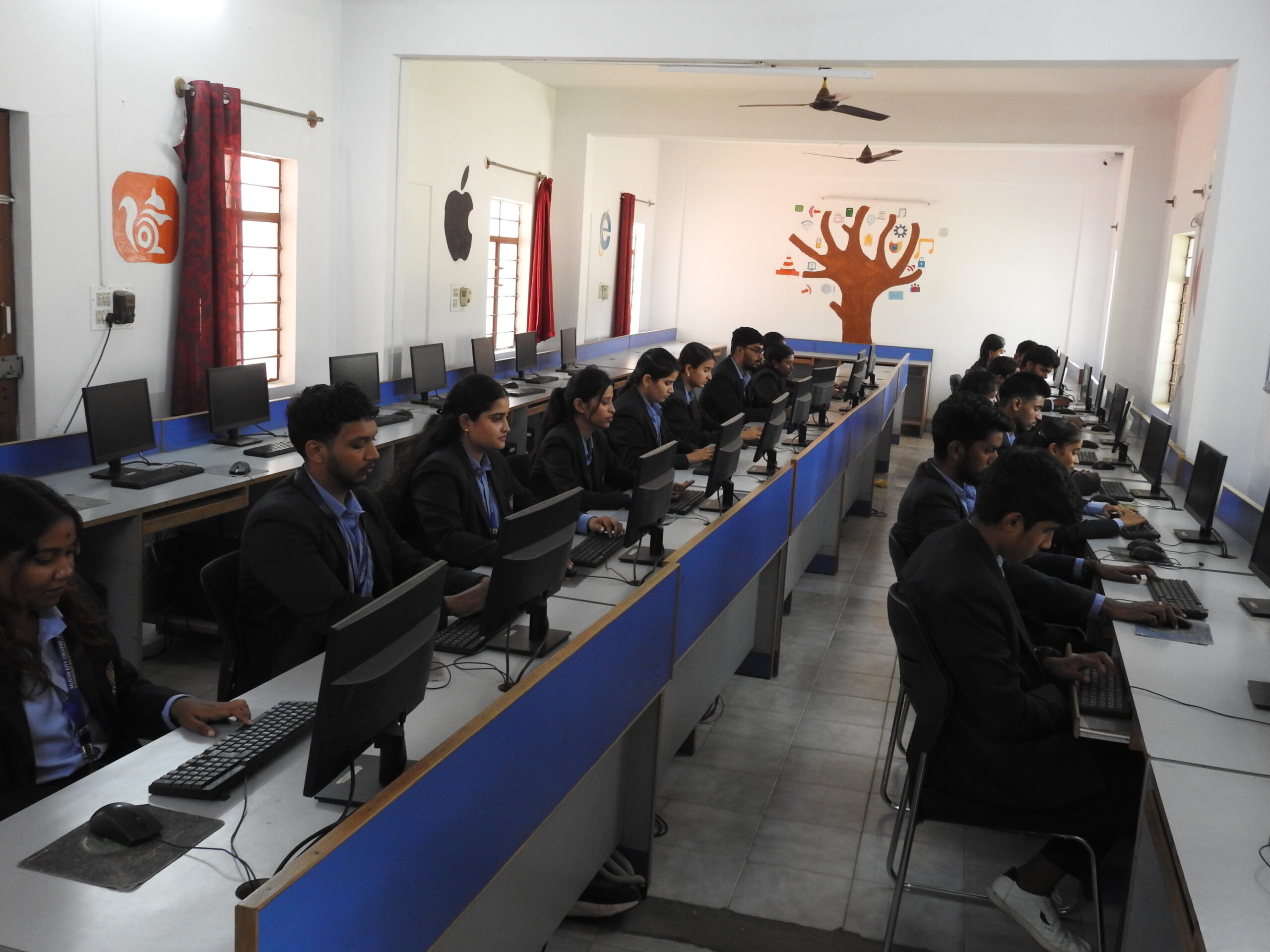
- State-of-the-Art Infrastructure: Science is not merely theoretical; it is highly experiential. SCC boasts advanced, fully equipped, modern laboratories for Physics, Chemistry, Biology, Computer Science, and Electronics. Our Campus Facilities ensure that students are not just reading about experiments in textbooks, but actively conducting them, fostering a deep, practical, and intuitive understanding of complex scientific principles.
- Expert Faculty and Mentorship: The transition to PU requires expert, empathetic guidance. SCC’s faculty consists of seasoned educators and subject matter experts who specialize in breaking down complex paradigms into digestible, conceptual frameworks. They go beyond the syllabus, offering dedicated mentoring that addresses both academic hurdles and the psychological pressure of competitive exams.
- Integrated Competitive Coaching: In today’s highly competitive landscape, simply passing board exams is not enough. Admission to premier undergraduate programs is dictated entirely by entrance exams like KCET, JEE, and NEET. Silicon City College integrates rigorous competitive exam coaching directly into the daily academic timetable. This ensures that students are prepared for multiple formats of testing without the need for external, exhausting, and expensive evening tuition classes.
- A Seamless Pipeline to Higher Education: As a comprehensive educational institution, SCC doesn’t just prepare you for board exams; it prepares you for a lifelong career. Science students benefit immensely from exposure to our undergraduate and post-graduate departments. From interactions with senior faculty in our BCA and BBA programs to guidance from our Admissions 2026 counseling team, students gain incredible visibility into their future degree options without ever having to leave the campus ecosystem.
A Step-by-Step Guide to Making Your Final Decision
If you are still struggling to decide between PCMB, PCMC, or PCME, follow this structured, strategic approach to gain clarity:
- Eliminate the Absolutes: Start by identifying what you definitely do not want to do. Do you absolutely hate dissecting biology specimens and memorizing anatomical terms? Eliminate PCMB. Do you despise sitting in front of a computer screen writing lines of code? Eliminate PCMC. Sometimes, knowing what you dislike makes the correct choice obvious.
- Reverse Engineer Your Goal: Look at professionals you admire or job titles you aspire to hold. Look at the degrees required for those jobs. If you want to build the next great AI application, trace the path backward: AI Engineer -> BCA/B.Tech Computer Science -> PCMC in PU.
- Analyze Your 10th Grade Performance: Did you score exceptionally well in Math but struggle in Science? Did you love Biology but find Physics challenging? Your past academic performance is a strong, data-driven indicator of your natural aptitudes. Don’t ignore it.
- Speak to Current Students: Reach out to seniors who are currently in their 1st or 2nd PUC. Ask them about the daily workload, the difficulty of the labs, and the reality of balancing board exams with competitive coaching. Real-world insights are invaluable.
- Trust the Process: Remember that while this choice is important, it is not a life sentence. The skills you learn in the Science stream—discipline, logic, resilience, and analytical thinking—will serve you well no matter where your career ultimately takes you.
Frequently Asked Questions (FAQs)
Can I switch from PCMB to PCMC after my 1st PUC?
Is PCMC strictly better than PCMB for software engineering?
Does Silicon City College provide integrated coaching for NEET and JEE?
Can a Science student pursue a B.Com or BBA degree later?
Is PCME a good choice if I want to do Mechanical Engineering?
What is the main difference in workload between Biology and Computer Science?
Explore the BBA program at Silicon City College, one of the promising BBA colleges in Bangalore, designed to provide students with a strong foundation in business management, entrepreneurship, finance, marketing, human resources, and organisational skills.
The Bachelor of Business Administration (BBA) program combines classroom learning with practical exposure, internships, industry interaction, leadership opportunities, and skill-based learning to prepare students for diverse career opportunities in the corporate and business world.
Take the next step toward a successful management career with a BBA course in Bangalore that helps you develop the knowledge, confidence, communication skills, and professional mindset needed to thrive in today's competitive business environment.
Related Insights & Perspectives
M.Com Scope, Syllabus & Corporate Finance Careers in Bangalore
BLOG M.Com Scope, Syllabus & Corporate Finance Careers in Bangalore Postgraduate Commerce Roadmap: M.Com Scope, Syllabus & Corporate Finance Careers in Bangalore (2026) Bangalore...
Read MoreM.Sc Computer Science Scope, Syllabus & Tech Careers Bangalore
BLOG M.Sc Computer Science Scope, Syllabus & Tech Careers Bangalore Postgraduate Computer Science Guide: M.Sc CS Scope, Syllabus & Tech Careers in Bangalore (2026)...
Read MorePU Commerce Combinations (CEBA, SEBA, HEBA) Guide Bangalore
Blog PU Commerce Combinations (CEBA, SEBA, HEBA) Guide Bangalore Exploring PU Commerce Combinations: The Ultimate Guide for 10th Graduates in Bangalore (2026) Over the...
Read MorePU Science Combinations After 10th: PCMB vs PCMC vs PCME Guide (2026)
BLOG PU Science Combinations After 10th: PCMB vs PCMC vs PCME Guide (2026) Ultimate Guide to Choosing the Right PU Science Combination After 10th...
Read More
3 Responses